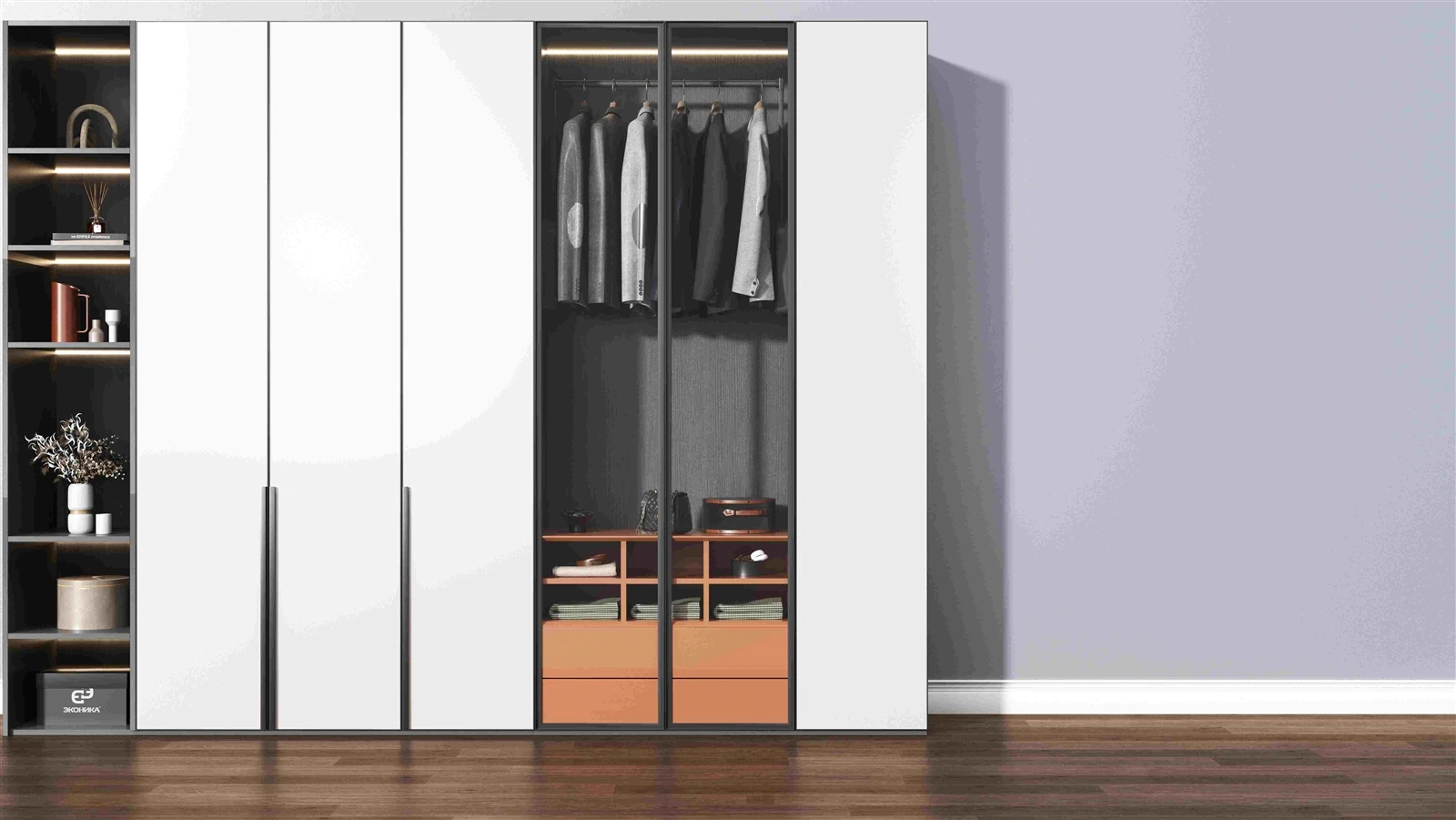
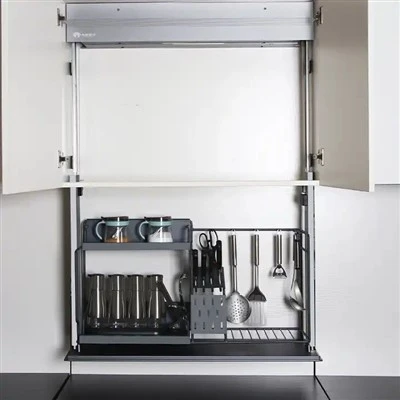
Why Are More And More Custom Home Furnishing Brands Switching To Electric Lift-Up Clothes Rods?
May 16, 2026
An increasing number of custom home furnishing brands, project developers, and hardware distributors are gradually shifting their product focus toward Motorized Wardrobe Rod. From an industry perspective, this represents an evolution of storage hardware from "traditional mechanical structures" to "smart electromechanical systems."

I. Why Are Traditional Manual Drop-Down Clothes Rails Beginning to Show Their Limitations?
1. Insufficient structural stability after long-term use
Traditional manual pull-down clothes rods primarily rely on springs, gas struts, or mechanical return systems to function.
During the initial usage phase, these products typically meet basic lifting needs, but as usage frequency increases, mechanical fatigue issues gradually emerge.
Common after-sales issues in the industry include:
Weakened return force
Stuttering during lifting
Uneven force distribution between left and right sides
Loose rivets
Sagging crossbars
Deformed connection points
Especially in the low-cost market, to control costs, some products use thinner carbon steel or simplify the internal structure.
Under long-term full-load conditions, product stability is often difficult to maintain.
For distributors and engineering clients, these issues not only mean higher after-sales costs but also directly impact the end-user project experience.
2. Dynamic load-bearing capacity is gradually failing to meet the demands of modern wardrobes
In the past, wardrobe hanging needs were relatively simple, but today consumers' frequency of use and load-bearing requirements for tall wardrobes have significantly increased.
Heavy winter garments such as overcoats, down jackets, and suits place continuous pressure on the crossbars and supporting structures.
While many traditional manual products on the market claim a load capacity of 10–15 kg, most of these figures are based on static test data and do not fully reflect actual performance during long-term dynamic use.
During frequent raising and lowering:
Leverage pressure
Dynamic impact
Long-term stress fatigue
can all accelerate structural deformation.
As modern wardrobes continue to grow in size, consumers are placing increasingly higher demands on long-term stability and high load-bearing capacity.
3. Traditional pull-down mechanisms are limiting high-end custom cabinet design
For today's high-end custom furniture industry, space utilization has become one of the core competitive factors.
However, traditional manual pull-down rods require space to accommodate their forward-tilting motion, which significantly restricts the internal layout of the cabinet.
This means:
The lower section cannot be fully utilized for drawer systems
Shelf layouts are compromised
Certain storage areas cannot be effectively utilized
Space is easily wasted inside tall cabinets
In modern integrated custom design solutions, designers are increasingly turning to vertical lift mechanisms to improve overall space utilization.
II. Why are electric lift-up clothes rails experiencing rapid growth?
1. Motor technology has matured, and the industry has entered a stable growth phase
A few years ago, electric lifting systems were still considered relatively high-end niche products.
However, as the domestic motor supply chain has gradually matured and the smart home industry has rapidly developed, the stability and cost structure of electric wardrobe lift have undergone significant changes.
Today, mainstream electric lifting systems commonly utilize:
Silent DC motors
Electronic limit switches
Synchronized lifting systems
Smart anti-pinch protection
Compared to traditional mechanical designs, the overall operation is more stable and smooth.
Acceptance of electric solutions is rapidly increasing in the high-end residential, smart home, and upgraded housing markets.


2. Comprehensive upgrades to structural materials and load-bearing capacity
Since they must support the motor and drive system, electric pull down closet rod typically meet higher structural standards than traditional manual products.
Currently, the industry's mainstream solutions are increasingly adopting:
6063 aluminum alloy profiles
Thickened steel bases
Reinforced support structures
Anti-corrosion surface treatment
Compared to traditional thin-walled carbon steel solutions, these structures offer superior:
Resistance to deformation
Long-term stability
Load-bearing capacity
Service life
Currently, mid- to high-end electric clothes rails generally have a dynamic load-bearing capacity of around 20 kilograms, capable of supporting heavy garments for long-term hanging.


3. Electric adjustable clothes rails are becoming part of smart storage systems
Today's electric adjustable clothes rails are no longer merely simple hardware components.
An increasing number of products are integrating deeply with smart home systems.
Currently, some mid-to-high-end models already support:
Remote control
Touch panels
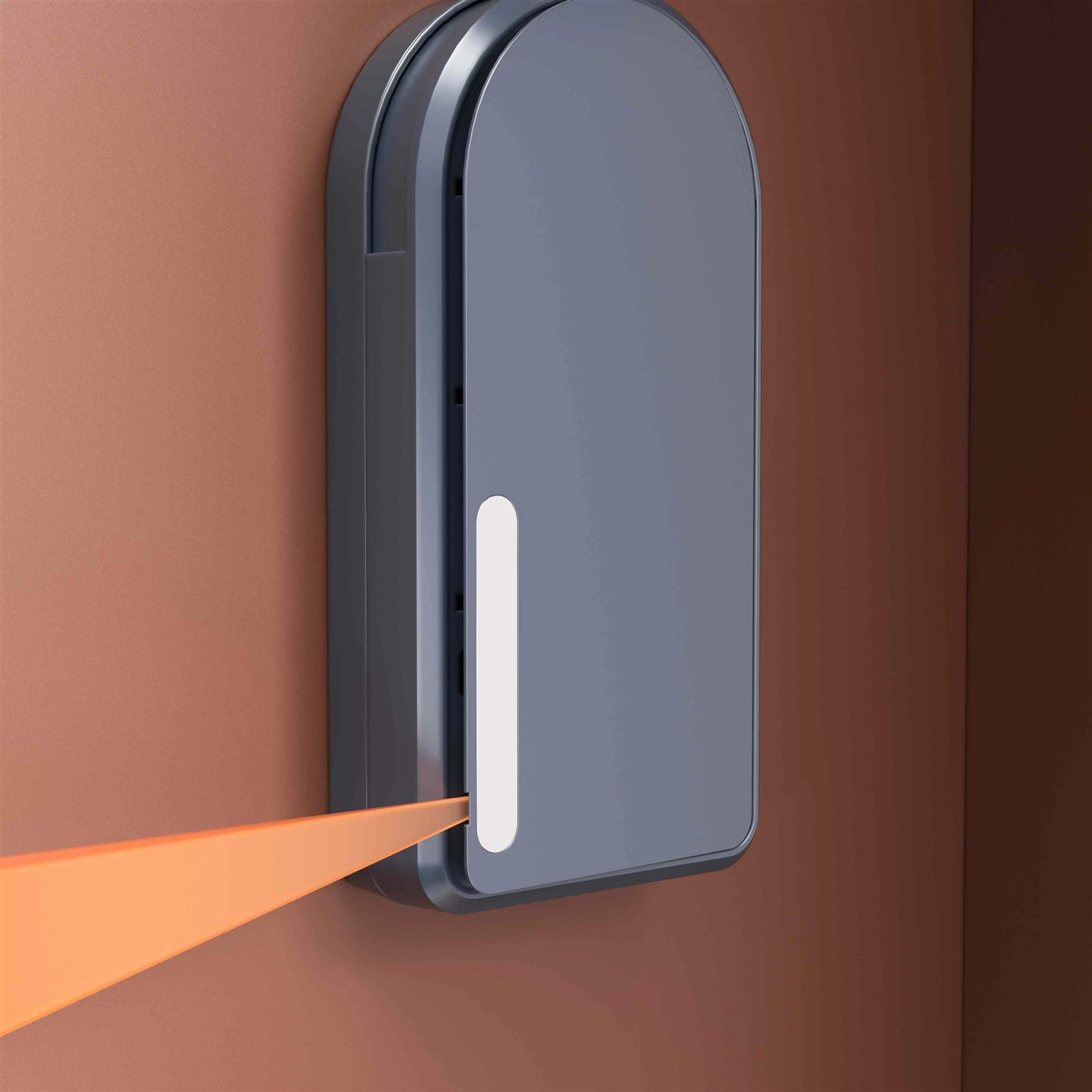
Radar sensing
Voice control
LED lighting
Smart Integration
For custom home furnishings brands, this means products can evolve from "basic hardware" to "smart storage systems."
This is also one of the key reasons for the rapid growth of smart wardrobe solutions in recent years.
III. What issues should B2B buyers focus on?
As market demand grows rapidly, an increasing number of distributors are entering the electric adjustable clothes rail sector.
However, for buyers, product selection should not be limited to appearance or basic functionality.
What truly impacts long-term cooperation is often product stability, supply chain capabilities, and post-sales service management.
1. Stability of the Motor and Transmission System
The motor is the core component of the entire product.
When purchasing, we recommend focusing on the following:
Whether silent DC motors are used
Motor lifespan test data
Number of lifting cycles
Stability during long-term continuous operation
Whether emergency descent in the event of a power outage is supported
Additionally, the drive mechanism directly affects long-term stability.
Currently in the industry:
Screw drive
Wire rope drive
These are the two most common approaches.
In comparison, screw-type structures typically offer better long-term synchronous stability.
2. Dynamic load-bearing capacity is more important than static parameters
The load-bearing data advertised by some suppliers represents theoretical static limit values.
However, for actual engineering projects, stable performance during long-term dynamic operation is more critical.
When purchasing, we recommend focusing on:
Dynamic load capacity
Long-term stability under full load
Crossbar bending resistance
Profile thickness and material grade
Smooth operation under full load
A truly reliable product must maintain stable operation even after long-term, frequent use.
3. Safety Features and Post-Sales Risk Management
For engineering projects and overseas markets, safety has become a key procurement criterion.
We recommend verifying whether the product features:
Stop-on-obstacle
Anti-pinch protection
Motor Overheat Protection
Bilateral synchronized and stable control
Manual emergency descent function
These features not only impact the end-user experience but also directly affect post-sales service rates.
4. OEM/ODM and Supply Chain Capabilities
With the rapid growth of the smart storage market, an increasing number of brands are seeking stable OEM/ODM manufacturing partners.
For overseas buyers and channel partners, supply chain capabilities are equally critical.
We recommend focusing on the following:
OEM/ODM Capabilities
Stability of bulk deliveries
Long-term supply capability for components
Support for international certifications
Export experience
Project Collaboration Capabilities
Suppliers with mature manufacturing systems and long-term delivery capabilities are often better positioned to gain a competitive edge in future markets.
As a brand specializing in smart adjustable home hardware, Angel Particle has in recent years continued to expand its product portfolio in the areas of electric adjustable clothes rods, smart storage systems, and high-end custom hardware to meet the demand for smart storage solutions across various markets.


IV. Electric Adjustable Clothes Rails Are Moving from the High-End Market to the Mainstream Market
A few years ago, automatic lifting clothes hanger were primarily used in:
High-end villas
Luxury residential projects
High-end walk-in closets
Smart home systems


But today, with
the widespread adoption of smart home technology
the maturation of the domestic motor industry
the growing trend of consumption upgrades
Upgrades in the custom home furnishings industry
increasing demand from an aging population
Wardrobe lift closet rods are gradually entering the mainstream mid-to-high-end market.
An increasing number of custom home furnishings brands are also beginning to incorporate them as a key feature to enhance the competitiveness of their overall solutions.
For hardware distributors and furniture brands, this not only represents an opportunity for product upgrades but also signals that the smart storage market is developing a new growth trajectory.